
Politics of Australia
Westminster-style democracy with federalism and a written constitution.

uncertain · Public domain
The politics of Australia operate under a written constitution that establishes a constitutional monarchy, a parliamentary democracy in the Westminster tradition, and a federal system.
- System
- Constitutional monarchy, parliamentary democracy, federation
- Head of State
- Monarch (King Charles III), represented by governor-general
- Head of Government
- Prime Minister (Anthony Albanese)
- Legislature
- Bicameral Parliament (House of Representatives and Senate)
- Voting
- Compulsory, largely two-party system
Lore & Background
Australia's federal government consists of three branches: legislative (Parliament), executive (prime minister, cabinet, ministers, departments), and judicature (High Court and other federal courts). The government is formed by the party or coalition with majority support in the lower house, exercising both executive and legislative power. The separation of powers is not strict between executive and legislative branches, as ministers must also be members of the legislature. Only a court can deem a law unconstitutional.
Reader's Guide
The Australian system combines elements from the United Kingdom (fused executive, constitutional monarchy) and the United States (federalism, written constitution, strong bicameralism), characterized as a 'Washminster mutation'. The federal nature divides power among three levels: federal, state/territory, and local government. The House of Representatives reflects state populations, while the Senate provides equal representation for each state, protecting smaller states' influence. The federal government can legislate on specific matters (defence, inter-state trade, bankruptcy), with states responsible for hospitals and schools. Tied grants allow the federal government to influence state legislation due to vertical fiscal imbalance. The Constitution can be amended only through a referendum requiring a double majority: a majority of all votes and a majority of votes in a majority of states.
Did You Know?
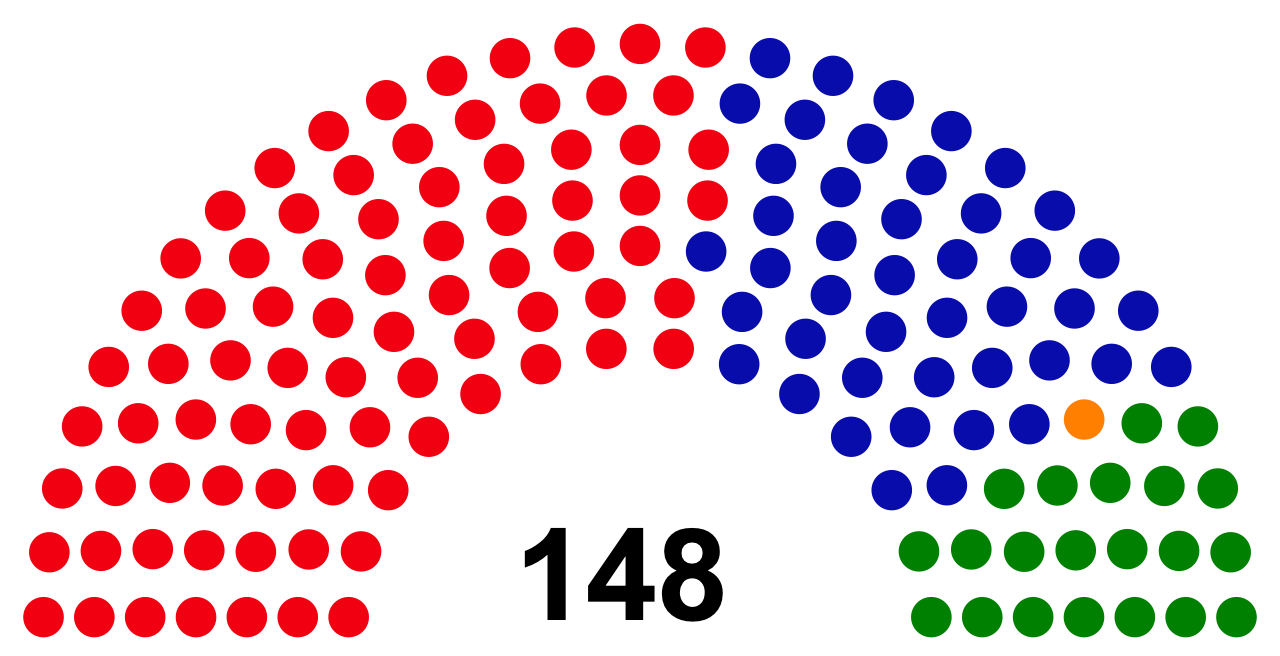
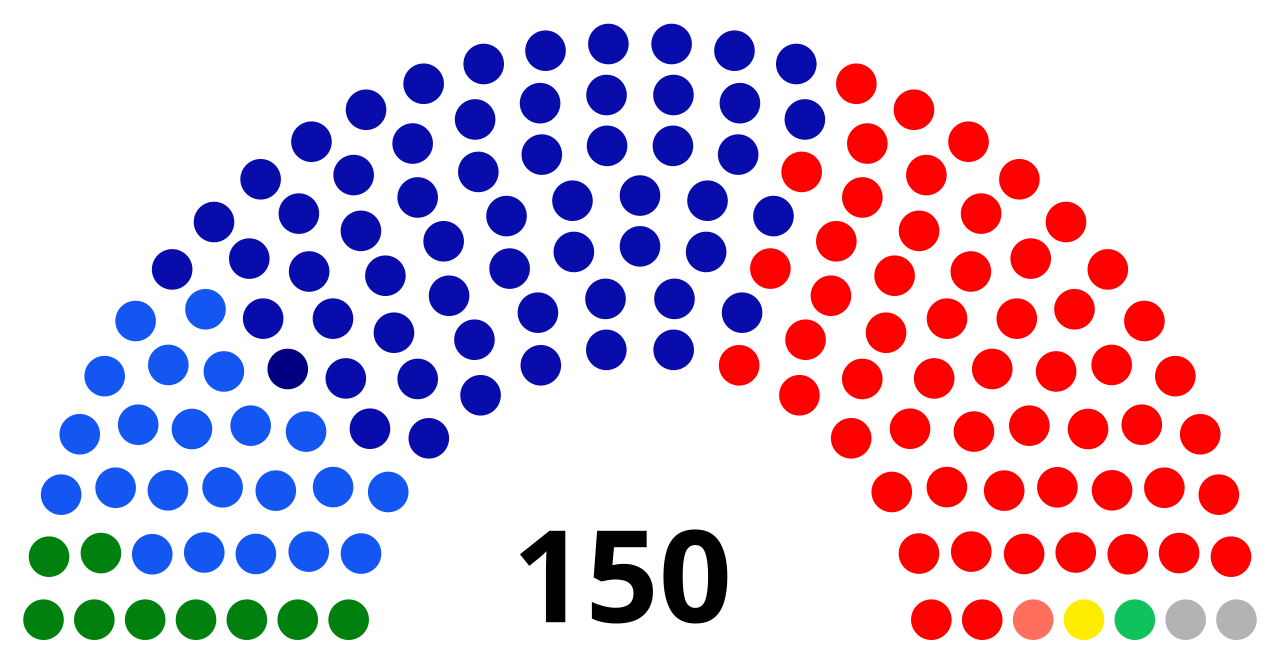
- The Senate has 76 members: 12 from each of the six states and 2 each from the Australian Capital Territory and Northern Territory.
- The governor-general retains some reserve powers not subject to the approval of another person.
- The monarch of Australia is a separate office from the monarch of the United Kingdom, despite being held by the same person.
Defining the Discipline and Its Internal Debates
Comparative politics is fundamentally about systematically examining how political systems around the world differ and resemble one another. Rather than studying a single nation in isolation, scholars in this field look across borders and across time to identify patterns in regimes, electoral frameworks, governance structures, and policy results. The discipline asks why certain configurations of power emerge in one country but not another, and what developmental shifts produced those divergences. Its scope stretches to broad themes like democratization, globalization, and regional integration. A key internal debate concerns whether the field is defined by its subject matter or by its method. Arend Lijphart insists the discipline is methodological at its core—concerned with the how rather than the what—while Peter Mair and Richard Rose see it as a blend of a substantive focus on national political systems and a shared conceptual toolkit for spotting similarities and differences. In some American academic contexts, the label is loosely applied to mean simply the politics of other countries, a usage that many scholars contest.
Intellectual Lineage and the Two Constitutional Traditions
The intellectual roots of comparative politics stretch back to ancient Greek thought. Harry H. Eckstein traces an unbroken thread of contributors from Aristotle through Machiavelli, Montesquieu, and into the modern era with figures like Gaetano Mosca, Max Weber, Vilfredo Pareto, and Robert Michels. James Bryce's 1921 work on modern democracies and Carl Joachim Friedrich's 1937 study of constitutional government and democracy represent later milestones. Philippe C. Schmitter organizes this lineage into two broad traditions. The first, which he calls sociological constitutionalism and attributes to Aristotle, encompasses thinkers from Polybius and Marx to twentieth-century figures such as Stein Rokkan, T. H. Marshall, Seymour Martin Lipset, Juan Linz, and Eckstein himself. The second, legal constitutionalism, which Schmitter links to Plato, runs through Léon Duguit, James Bryce, Woodrow Wilson, and into the work of Maurice Duverger, Giovanni Sartori, and Klaus von Beyme. This dual heritage shows the field has always balanced empirical social analysis with formal legal-institutional inquiry.
Methodological Shifts and Theoretical Renewal
Over the past four decades, comparative politics has undergone significant theoretical and methodological transformation. A wave of new frameworks has entered the discipline, including political culture analysis, dependency theory, developmentalism, corporatism, indigenous theories of social change, comparative political economy, state-society relations, and new institutionalism. Equally important is a shift in the unit of analysis. While the field historically relied on whole-country comparisons, contemporary scholars increasingly turn to subnational units—regions, provinces, municipalities—as their primary objects of study. This subnational turn contributes fresh methodological tools, theoretical insights, and substantive findings to the broader enterprise. A critical methodological constraint remains: comparisons must be conducted at a fixed point in time, typically the present. A researcher cannot validly pit a system from one era against a system from another; the objects of comparison must be static. This requirement ensures that observed differences reflect genuine structural variation rather than mere historical drift.
Practical Relevance and Cross-Border Insight
Comparative politics serves as an essential lens for understanding how political structures function and why they vary so dramatically across the globe. Historical, social, ethical, and racial differences shape institutions in ways that make even formally similar organizations operate quite differently in practice. A vivid illustration involves India and the United States: both are majority-rule democracies, yet the U.S. employs a liberal presidential system with a president as head of state, while India operates a parliamentary system led by a prime minister. Decision-making processes diverge sharply between the two despite their shared democratic commitment. The discipline also intersects with international relations and conflict resolution. While both are subfields of political science, comparative politics specifically probes the domestic causes of international strategy and examines how global frameworks and approaches ripple back into national political conduct. By clarifying worldwide legislative issues and current strategic conditions, the field helps scholars and policymakers make sense of an interconnected political landscape.
Gallery


More in Comparative Politics 1-23
Spotted an error? Know more?
This is a living reference — every entry is fact-audited, and reader corrections feed straight into our audit queue. Suggest an edit · See this site's audit record