Politics of China
A one-party authoritarian state under CCP leadership.

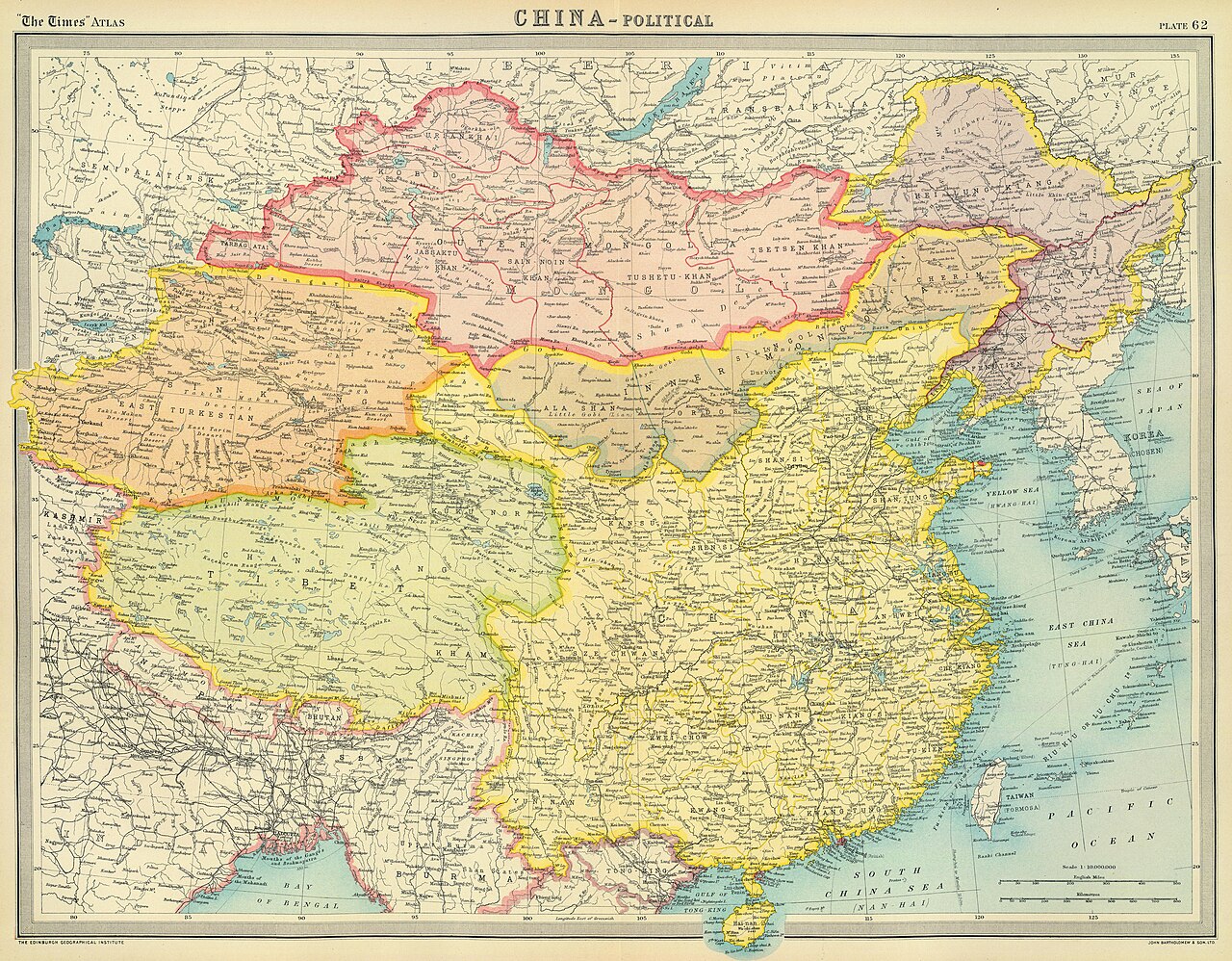
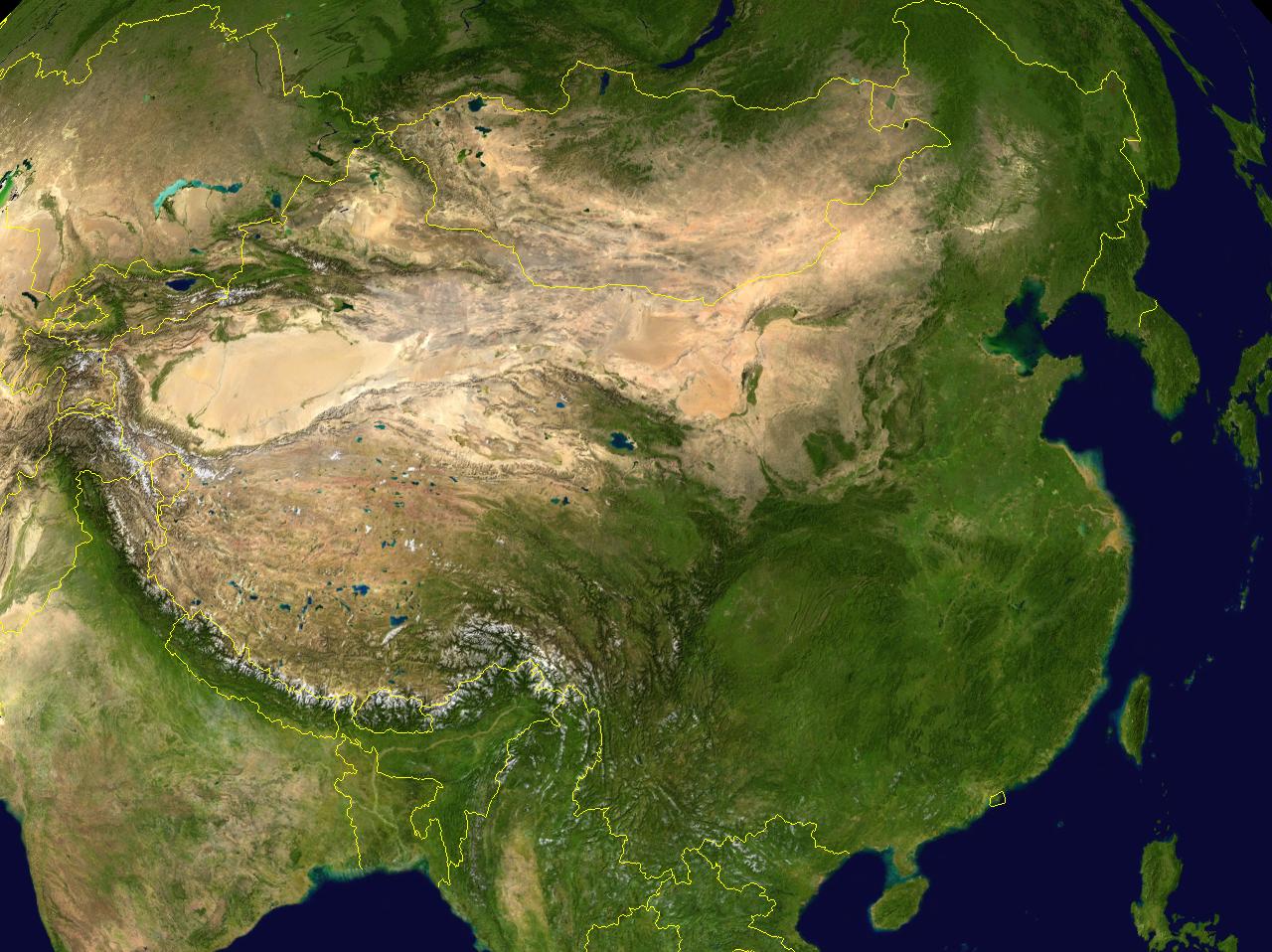
Bartholomew, J. G. · Public domain
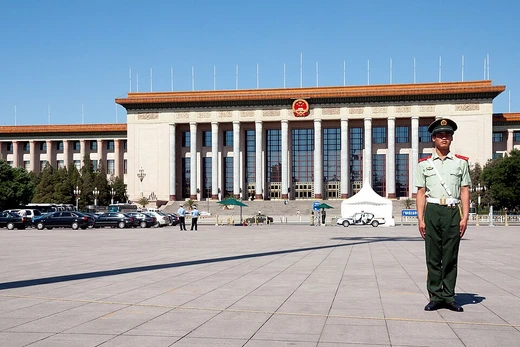
The politics of China operate within a unitary communist state dominated by the Chinese Communist Party (CCP). The CCP enacts its policies through people's congresses, with the National People's Congress (NPC) constitutionally designated as the highest state organ of power. The system is considered authoritarian, with no freely elected national leaders, suppressed political opposition, and curtailed civil rights.
- Type
- Unitary communist one-party state
- Ruling Party
- Chinese Communist Party (CCP)
- Highest State Organ
- National People's Congress (NPC)
- Head of State (ceremonial)
- President
- Head of Government
- Premier of the State Council
- Leading Official
- General Secretary of the CCP
- Most Powerful Body
- Politburo Standing Committee
Lore & Background
The political system is characterized by unified state power, with the NPC constitutionally enshrined as the highest state organ. The CCP controls all elections, with limited direct elections only at the local level and all candidate nominations controlled by the party. The State Council, headed by the Premier, serves as the executive organ, while the judiciary lacks independence and is subject to CCP control through the Central Political and Legal Affairs Commission.
Reader's Guide
The significance of China's political system lies in its comprehensive CCP control, described as one of the most durable regimes in modern history. The party sits above and parallel to the state, with committees in all government bodies, state-owned enterprises, and public institutes. The NPC meets annually for about two weeks, delegating powers to its Standing Committee, which adopts most legislation. The presidency is ceremonial, while the General Secretary of the CCP is the leading official. The system's authoritarian nature is reflected in suppressed dissent, controlled religious activity, and curtailed civil rights. The constitution describes the system as a 'people's democratic dictatorship,' while the CCP also uses terms like 'socialist consultative democracy' and 'whole-process people's democracy.'
Did You Know?
- The National People's Congress is constitutionally the 'highest state organ of power.'
- All elections at all levels must adhere to the leadership of the CCP.
- The Politburo Standing Committee is the most powerful decision-making body in China.
The Discipline's Core Mission and Scope
Comparative politics is fundamentally about understanding why political systems around the world look the way they do. Rather than examining a single nation in isolation, scholars in this field cast a wide net across countries, regions, and time periods to identify patterns in how governments function, how elections are structured, and how policies get made. The discipline is comparative because it seeks to explain both the similarities and the divergences between political arrangements, and systematic because it looks for recurring trends and regularities rather than one-off anomalies. Themes that have drawn sustained attention include democratization, globalization, and regional integration. Over the past four decades, the field has absorbed a remarkable range of theoretical lenses—political culture, dependency theory, developmentalism, corporatism, state-society relations, and new institutionalism among them. Examples of the kind of questions it tackles include why presidential systems differ from parliamentary ones, why some democracies are multi-party while others settle into two-party competition, and how governance structures shape economic outcomes.
An Intellectual Lineage Spanning Millennia
The roots of comparative political thinking stretch back to Aristotle, and from there a continuous thread of thinkers has shaped the discipline. Machiavelli and Montesquieu contributed early frameworks for understanding how different forms of government operate. In the late nineteenth and early twentieth centuries, figures such as Gaetano Mosca, Max Weber, Vilfredo Pareto, and Robert Michels deepened the analytical toolkit. James Bryce's Modern Democracies (1921) and Carl Joachim Friedrich's Constitutional Government and Democracy (1937) represented important milestones in the field's maturation. Harry H. Eckstein has been particularly influential in tracing this unbroken chain of intellectual contribution. The discipline has evolved from broad between-country comparisons toward increasingly sophisticated subnational analyses, where researchers examine regional or local variations within and across nations. This shift has enriched both the methodological and theoretical foundations of the field, bringing fresh perspectives to long-standing questions about how political power is organized and exercised.
Two Foundational Intellectual Traditions
Philippe C. Schmitter has argued that the intellectual family tree of comparative politics branches into two principal lineages. The first, which he labels sociological constitutionalism, traces back to Aristotle and was carried forward by scholars including Polybius, Machiavelli, Montesquieu, Tocqueville, Marx, Weber, Durkheim, Michels, Mosca, and Pareto. In the twentieth century this tradition was often called historical political sociology and was advanced by figures such as Stein Rokkan, T. H. Marshall, Reinhard Bendix, Seymour Martin Lipset, Juan Linz, and Harry H. Eckstein. The second lineage, legal constitutionalism, descends from Plato and was developed by scholars like Léon Duguit, Georges Burdeau, James Bryce, A. Lawrence Lowell, and Woodrow Wilson. Its twentieth-century heirs include Maurice Duverger, Herman Finer, Giovanni Sartori, Carl Joachim Friedrich, Samuel Beer, Jean Blondel, and Klaus von Beyme. Together, these two streams have provided the discipline with complementary ways of interrogating how constitutions, institutions, and political behavior interact across different national contexts.
Practical Significance for Global Understanding
Comparative politics plays a vital role in making sense of the enormous variation in political structures around the world. Historical, social, ethical, and cultural differences mean that even seemingly similar institutions operate in fundamentally different ways from one country to the next. A striking illustration involves India and the United States: both are majority-rule democracies, yet the U.S. employs a liberal presidential system with a president as head of government, while India relies on a parliamentary model led by a prime minister. The decision-making processes in each country diverge considerably despite the shared democratic label. Beyond domestic analysis, the field feeds directly into international relations and conflict resolution, helping clarify the causes of international strategy and the ways global frameworks reshape domestic political conduct. Scholars like Arend Lijphart have emphasized that comparative politics is defined less by a fixed substantive topic and more by its methodological commitment to explaining the how of political analysis, while Peter Mair and Richard Rose stress the combination of substantive focus on national political systems with a method for identifying and explaining cross-country similarities and differences.
Gallery

More in Comparative Politics 1-23
Spotted an error? Know more?
This is a living reference — every entry is fact-audited, and reader corrections feed straight into our audit queue. Suggest an edit · See this site's audit record